


What is the Way Forward?

Meta title: Melbourne Tower Lockdown: What Happened & The Way Forward
Meta description: This case study looks back on the trauma caused by the Melbourne public housing tower lockdown, as well as how residents can heal and move forward.
“Just trying to be one of the role model for the community”
As Coronavirus began to sweep the world in early 2020, Australians watched on in horror. Every night, our news programs showed us vision of boarded-up shops in New York, eerily quiet streets in Paris, and people staring out of their apartment windows in Spain, craving the fresh air they once took for granted.
For some time, many of us felt distanced from the pandemic, as the virus hadn’t yet made its way to our shores. After all, we’re an island. We don’t share borders with other countries, unlike Europe, and even our closest neighbour is “across the ditch”.
Yet within just weeks, Australia recorded its first case of Covid-19, with more beginning to sprout up on a daily basis. Pretty quickly, we went from the ‘Lucky Country’, to a country scared out of its brains. This was serious stuff.
The Lockdown
Of course, there’s no rule book for a situation like this, so our country’s leaders looked to overseas countries and how they were reacting to the widespread disease.
The solution? Lockdown. And while there is plenty of evidence to suggest that this dramatic reduction of movement and contact between people helps to stop the spread, it all went horribly wrong here in Melbourne of July last year. Let me paint the all-too-familiar scene:
You’re going about your typical Saturday afternoon at home. Washing the dishes, making a sandwich, telling your kids to stop shouting for the millionth time that day. That sort of thing.
Victoria was teetering on the edge of its second COVID-19 wave. ‘Stay at home’ orders had been reimposed three days earlier on ten Melbourne postcodes. But with rising case numbers every day, the city seemed on the verge of breaking point.
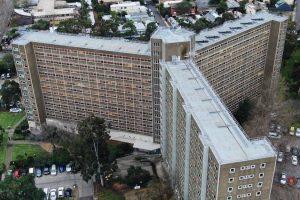
Yet, for 3,000 residents residing in 9 inner-Melbourne public housing towers, they were completely unaware that they were just minutes away from essentially becoming experiment prisoners in their own homes.
Earlier that day, health officials had recommended a lockdown to begin the following day, on the 5th of July, to allow planning for food supplies and logistics. However, Premier Dan Andrews announced on the 4th of July that it would begin immediately. As in, that minute.
And as for those 3,000 residents living within the 9 public housing towers? They learned of their shocking and completely unexpected fate when hundreds of police officers descended upon their front lawn, telling them they were no longer allowed to leave the building.
Unlike other Melburnians, residents of the nine towers remained under police guard and couldn’t leave their residence for any reason – including buying necessary items such as food, baby formula, or medicine, and go to work as well as to exercise (unless seniors exempt for the need of fresh air – therefore one of the officers will walk with them like a bodyguard = just in case so the residents doesn’t run away!) like detention centre vibe.
Why Were the Towers Subject to Tougher Restrictions?
It’s pretty crazy to think something like this could happen here in Australia, right?
So, let’s look at exactly why these 9 public housing towers were subject to stricter restrictions than the rest of Melbourne and – to date – the rest of Australia.
By late in the evening of 3 July 2020, almost two dozen recently confirmed cases of COVID-19 had been connected to three public housing towers located at the Flemington and North Melbourne public housing estates.
After five days the lockdown was lifted at eight of the nine towers. People living at 33 Alfred Street (I’m one of the residents), however, were required to remain in their homes for a further nine days when testing revealed up to 11% of residents had tested positive to the virus.
Mary-Louise McLaws, a professor of infectious diseases at UNSW and member of the World Health Organization’s COVID-19 advisory panel described these densely populated towers as “pressure cooker environments”. And sadly, she wasn’t referring to a delicious beef stew.
Like many, she was worried that the crowded towers would result in Covid spreading throughout the residence like wildfire, causing mass devastation among those that live there. Her solution? People who test positive should be put somewhere safe “where they can be looked after mentally, emotionally, and medically”. She meant well. [Mental Health breakdown prevention]
But the questions have understandably been raised about whether the government meant well when they decided to force residents into a harsh “Hard” lockdown without warning. It sounds like an Australian television comedy quiz show “Hard Quiz” hosted by Mr Tom Gleeson, with one of his famous line segment “Let’s play… HARD!”, but instead the government ordering us “Let’s lock’em… HARD!”.
Spoiler alert: they didn’t. But of course, many of you would now know that.
Housing Minister Richard Wynne has said that the government had to act immediately because of the viciousness of the virus. Most frustratingly, to this day, he has not issued an apology to these 3,000 residents. His excuse? “We make no apology for saving people’s lives.”
Premier Daniel Andrews also came under a lot of fire for making the snap decision without having the decency to notify the tower residents. No one deserves to find out their fate on live TV, nor should they immediately find police preventing them from leaving their residence, before they are even aware of the restrictions. But he too maintains his innocence. He described some living in the towers as among the state’s most “vulnerable” people.
He told residents, “The strategy here is to complete the testing and then as soon as possible… to have those nine towers moved to the same footing as the rest of Melbourne. This is not going to last a moment longer than it needs to.”
Well, I’ll let you be the judge of that.
What the Residents Had to Endure
The locked-down public housing towers are occupied largely by refugees, migrants from non-English-speaking communities, or low-income earners. Many of these residents have said that seeing armed police swarming around their homes was traumatic for them and their families, especially for those who had previously fled from countries where human rights abuses happened all the time. They are still processing. [in need of therapy services]
Within the first 2 days of the lockdown, there were serious problems with the delivery of food, and videos circulated featuring residents sorting through piles of expired food. Additionally, pork and other culturally inappropriate food was reported as being delivered to Muslim families. To put it lightly, the whole situation was messier than a teenage boy’s bedroom. But the shortcomings didn’t just stop there.
Some residents have even revealed that they were so fearful of police and health department workers, that they didn’t want to eat the food in case it was poisoned.
And at the tower at 33 Alfred St, residents waited more than a week to be allowed outside under supervision for fresh air.
It is through listening to what the residents had to about their lockdown that you really realize the immense trauma, confusion, and disappointment of their situation.
One resident at the Alfred Street tower, ‘Aaron’, said:
“We grew up here, we were born here, we know the system. We have doctors among us, psychologists … It felt like, are we in a safe place anymore, or not?… We felt unworthy, just people who live in public housing.”
Another tower resident, Ahmed, had this to say:
“No one expected to go into lockdown, especially in Australia. Why is this happening to us? Are we different? Do we happen to be a different class of people? But at the same time, you know, I completely understand because if you see the conditions that we live in, the size of this building, the communal corridors, washing+drying machine {in each level} and lifts that we share, you would be concerned about how easily Coronavirus can spread.
A lot of members of our community are scared of a backlash. We’re scared of racial profiling, because right now it looks like we’re the only people in Australia who are poor, are not heading to restrictions, who are spreading the virus, who don’t care about anyone else, and that’s far-fetched from the truth”. Consequently, majority of us kept quite and praying.
Dima, another confined tower resident, found out that her residence had been put into lockdown when a relative called her and told her to quickly watch the news on TV. She said the following:
“If you live within what I’m living currently, you would feel like you’re in a prison”. I do believe that the planning of this was horribly done. We were ambushed to be honest.
And finally, I’ll leave you with the story of past tower resident Melissa, who has since had to move elsewhere in Melbourne after the trauma strees she suffered with the lockdown. She reported:
“I can’t live there anymore. I get panic attacks every time I go into the foyer… it no longer feels like home. If you are not going to say sorry, what sort of guarantee is there that you are not going to do it to us again?”
After listening to what many of the residents of the towers had to say, it was clear to me that their issue wasn’t with the lockdown itself, but with the way it was implemented. And with the vastly different way they were treated, compared to other Melbourne residents, who could blame them? Can you imagine a luxury apartment building being subject to the same treatment? (say in Sydney!)
The words used to describe how this made them feel were often “other”, “lesser”, and “disposable”. These are hard-working, tax-paying, and cherished members of our community. They are mothers, fathers, daughters, sons, sisters, brothers, wives, and husbands. They are studying at university or running a non-profit or helping to volunteer/organize and uplift their community. So why were they treated like second-class citizens?
The Reaction Around the World
This might surprise you, but other nations around the world weren’t shocked by what happened in Melbourne. This is because the same, or worse, is happening in their own country.
In Germany, authorities put up metal fencing around residential buildings where thousands of workers from an infected meat factory live. The majority of whom are migrants.
In China, there were reports that the doors of some flats had been welded shut to keep people inside.
And in the Philippines, their President warned that people violating lockdown laws could be shot. Literally.
Of course, this does not excuse what happened here in Melbourne – quite the opposite, really. As a country known for its strong sense of community, care, and justice, something like this simply should not have occurred. (It needs a well thought out system with permission to speak to one of the community leaders first to pass it on better)
A Violation of Human Rights
In December 2020, the Victorian Ombudsman ruled that the public housing tower lockdown violated Victorian human rights laws. Although no apologies have been made to-date, this was a huge step forward in acknowledging that what these residents went through wasn’t right.
The investigation found a temporary lockdown was warranted and successfully contained the outbreak, but that its immediacy (closeness) was not based on direct public health advice.
The Ombudsman, Deborah Glass, said:
“The rushed lockdown was not compatible with the residents’ human rights, including their right to humane treatment when deprived of liberty. In my opinion, based on the evidence gathered by the investigation, the action appeared to be contrary to the law.”
Her findings were not a criticism of Victorian health officials, who worked tirelessly to support residents and respond to the public health emergency. Rather, she believed proper consideration of human rights before the lockdown began would have put health – not security – front and centre.
She has recommended the Victorian Government apologise to the tower residents, acknowledging the impact of their immediate detention on their health and wellbeing.
A statement On Victorian Ombudsman Housing 17 December 2020 reports, that during the pandemic, they also invested in a range of protective health measures to help keep public housing tenants at all high-rises across Melbourne safe.
“This included on ground Health Concierges to help residents, hand sanitisers installed at every foyer and every floor, increased deep cleaning and cleaning of common touch points in high-rise buildings five times a day.”
“Our new Paving the Way Forward program is working with residents to identify and respond to their priorities around their home, neighbourhood and the services they receive. The new project will be designed with residents, local government and housing sector partners.
To date, more than 40 jobs have been created for North Melbourne and Flemington residents as part of
on-the-ground work in these communities, along with specific roles dedicated to cultural in-reach, leading to a better understanding of the experiences, issues, ideas and aspirations of these culturally-diverse communities.”
We thank every single public housing resident, volunteers, particularly those in the Flemington and North Melbourne housing towers, for their support and sacrifice in tackling this public health emergency.”
https://www.premier.vic.gov.au/statement-victorian-ombudsman-housing-report
Even the Age reports, “Charities, religious and cultural groups and community organisations have launched massive donation drives and collected tonnes of food and goods.
But confusion about whether donations could be accepted has led to standoffs at some towers, with donations being turned away at the Flemington estate.
Deliveries of food in the first two days were haphazard and disorganised.”
The Way Forward
The hard lockdown of these towers might be over, yet the trauma still remains. Despite the hardship, residents are trying to embrace the silver linings from this situation. They are focused on re-engaging as a community and increasing the resources available to them.
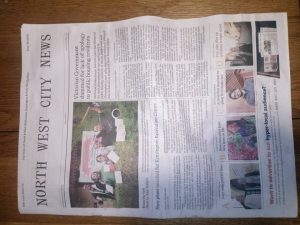
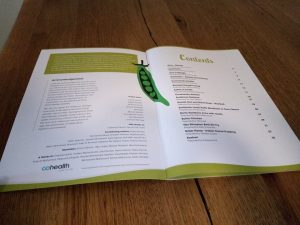
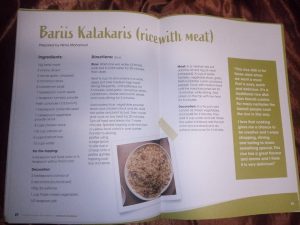
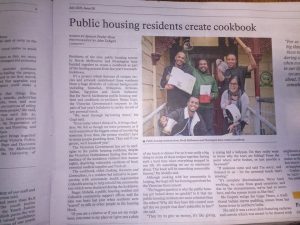
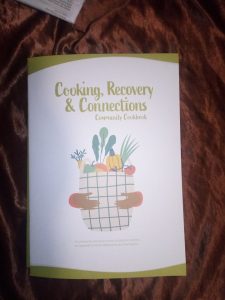
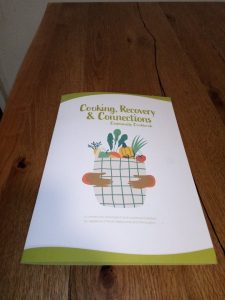
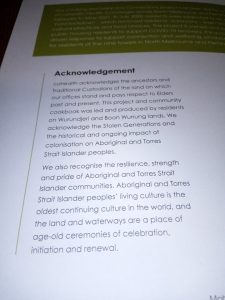
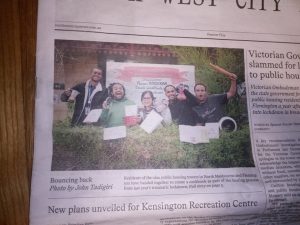
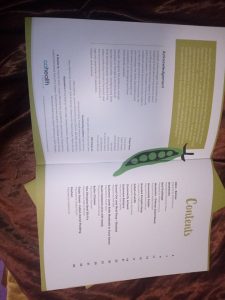
A year after the trauma of the hard lockdown of North Melbourne and Flemington public housing estates, Ms Deepa Gupta {a resident} and a team of residents who are also cohealth Concierges, have come together to reconnect the community through food. The cookbook project “Cooking Recovery & Connections”, features 18 delicious recipes that reflect the diverse cultural backgrounds of those living in the estates. Which seeks to rebuild trust after last year’s hard lockdown and features traditional recipes from Somalia, Sudan, Ethiopia, and Eritrea. Residents are also being given a chance to tell their stories through community art projects, highlighting the diverse range of creative talents among these individuals. (one of my family member are part of it too) *Check {North West City News}
Finally, the Department of Health and Human Services Victoria (DHHS) has provided recently a number of programs, (on hold for review practises) till approved within Paving The Way Forward grants last month, which aims to provide healing through embracing any activities or projects, community voice, arts, and culture. It is an opportunity for our youth community to have a voice, to address these concerns too, and to creatively express their frustrations. They are given a chance to articulate their concerns and get involved in creating solutions.
This is the way forward.
https://www.dhhs.vic.gov.au/publications/victorian-ombudsman-investigation-lockdown-33-alfred-street
https://www.abc.net.au/news/2021-08-07/victoria-covid-exposure-sites-melbourne-tarneit-supermarkets/100358218?fbclid=IwAR12fPVpiIutIg89d4_SJeo13f1lvgYUgIxdcz715Ef4Sqhs64bM0xPtooE
https://l.facebook.com/l.php?u=https%3A%2F%2Fwww.abc.net.au%2Fnews%2F2020-12-18%2Fmixed-reaction-ombudsman-report-into-melbourne-towers-lockdown%2F12995044%3Ffbclid%3DIwAR17t3_KwUXJPPTtJz_nM4loAbCjIlj8EbQmq6FukSz-WA64N590LogZzTQ&h=AT2cjwSbf9qyg3Jkwt958x0rQxSv6b7taOEwDL5Ks47JRmmjvU9JHW2HTVPS7TSmjfCfHblG40mw9VaKibEeAsoa6GLFltpUZD-dwPEMQ5_k-SlvIRc-JEtCk89U1mIJf3EJxsJaR6M
https://l.facebook.com/l.php?u=https%3A%2F%2Fwww.advocateme.com.au%2Fdetention-towers%3Ffbclid%3DIwAR1YSqzbRPKFN26CVdmGBMkuQQJ6pi7ikue3uLuhBuEdUIztgVt_zv4–VQ&h=AT2cjwSbf9qyg3Jkwt958x0rQxSv6b7taOEwDL5Ks47JRmmjvU9JHW2HTVPS7TSmjfCfHblG40mw9VaKibEeAsoa6GLFltpUZD-dwPEMQ5_k-SlvIRc-JEtCk89U1mIJf3EJxsJaR6M
https://l.facebook.com/l.php?u=https%3A%2F%2Fwww.mondaq.com%2Faustralia%2Fclass-actions%2F1061426%2Fvictorian-legal-watchdog-cancels-practising-certificate-of-outspoken-anti-lockdown-lawyer-serene-teffaha%3Ffbclid%3DIwAR22E5DZmCBmLCsApHS5emwN9sUpdSniTPnyTVnXkNQDbMm8D1F2WlDATJ4&h=AT2cjwSbf9qyg3Jkwt958x0rQxSv6b7taOEwDL5Ks47JRmmjvU9JHW2HTVPS7TSmjfCfHblG40mw9VaKibEeAsoa6GLFltpUZD-dwPEMQ5_k-SlvIRc-JEtCk89U1mIJf3EJxsJaR6M
https://l.facebook.com/l.php?u=https%3A%2F%2Fwww.eventbrite.com.au%2Fe%2Fstanding-up-with-serene-teffaha-our-rights-and-responsibilities-tickets-165253562855%3Ffbclid%3DIwAR1H2wQsW0NaVCYv2UtRsCpGkzzLDWHUyEOXqZrOkKei22kpj34BsnShz-o&h=AT2cjwSbf9qyg3Jkwt958x0rQxSv6b7taOEwDL5Ks47JRmmjvU9JHW2HTVPS7TSmjfCfHblG40mw9VaKibEeAsoa6GLFltpUZD-dwPEMQ5_k-SlvIRc-JEtCk89U1mIJf3EJxsJaR6M
https://www.facebook.com/AFLSolicitors/
https://l.facebook.com/l.php?u=https%3A%2F%2Fwww.abc.net.au%2Fnews%2F2021-04-22%2Fpublic-housing-tower-lockdown-class-action-in-doubt%2F100088556%3Ffbclid%3DIwAR3qwtbhWioRj1mpXZoSr9rb9Jd0aw_4OKqKOWQuXZzsa-FLtGXCyXNmatg&h=AT2cjwSbf9qyg3Jkwt958x0rQxSv6b7taOEwDL5Ks47JRmmjvU9JHW2HTVPS7TSmjfCfHblG40mw9VaKibEeAsoa6GLFltpUZD-dwPEMQ5_k-SlvIRc-JEtCk89U1mIJf3EJxsJaR6M
https://l.facebook.com/l.php?u=https%3A%2F%2Fwww.abc.net.au%2Fnews%2F2021-04-22%2Fpublic-housing-tower-lockdown-class-action-in-doubt%2F100088556%3Ffbclid%3DIwAR1L7NFg5A5HineXg3OBwmbllzuXmkDWSZP5rALBydJCKZIXuymHr5MuecQ&h=AT2cjwSbf9qyg3Jkwt958x0rQxSv6b7taOEwDL5Ks47JRmmjvU9JHW2HTVPS7TSmjfCfHblG40mw9VaKibEeAsoa6GLFltpUZD-dwPEMQ5_k-SlvIRc-JEtCk89U1mIJf3EJxsJaR6M
Mashallah